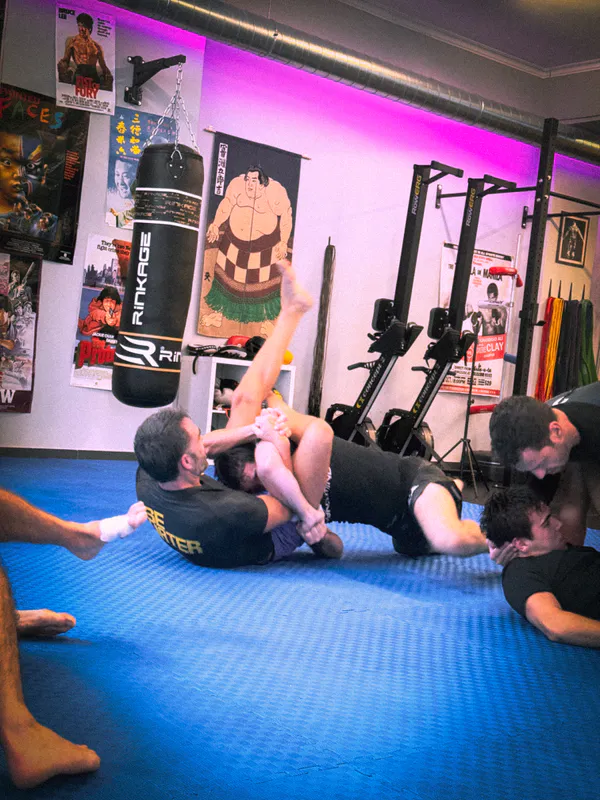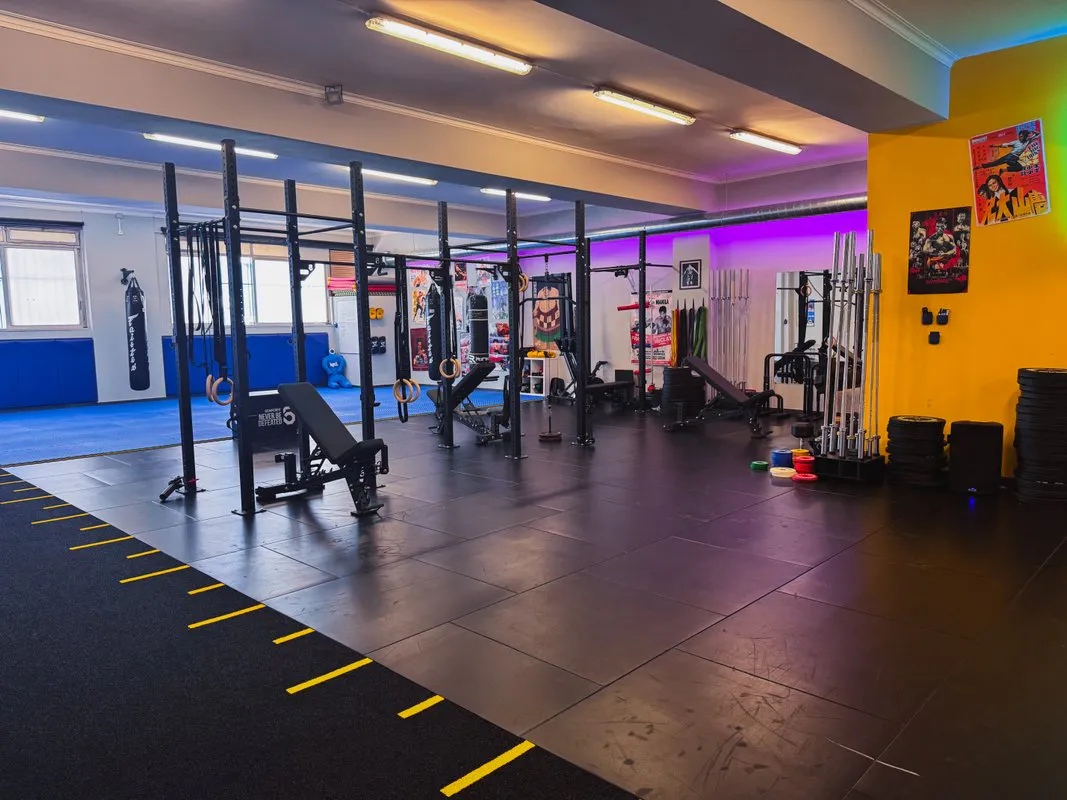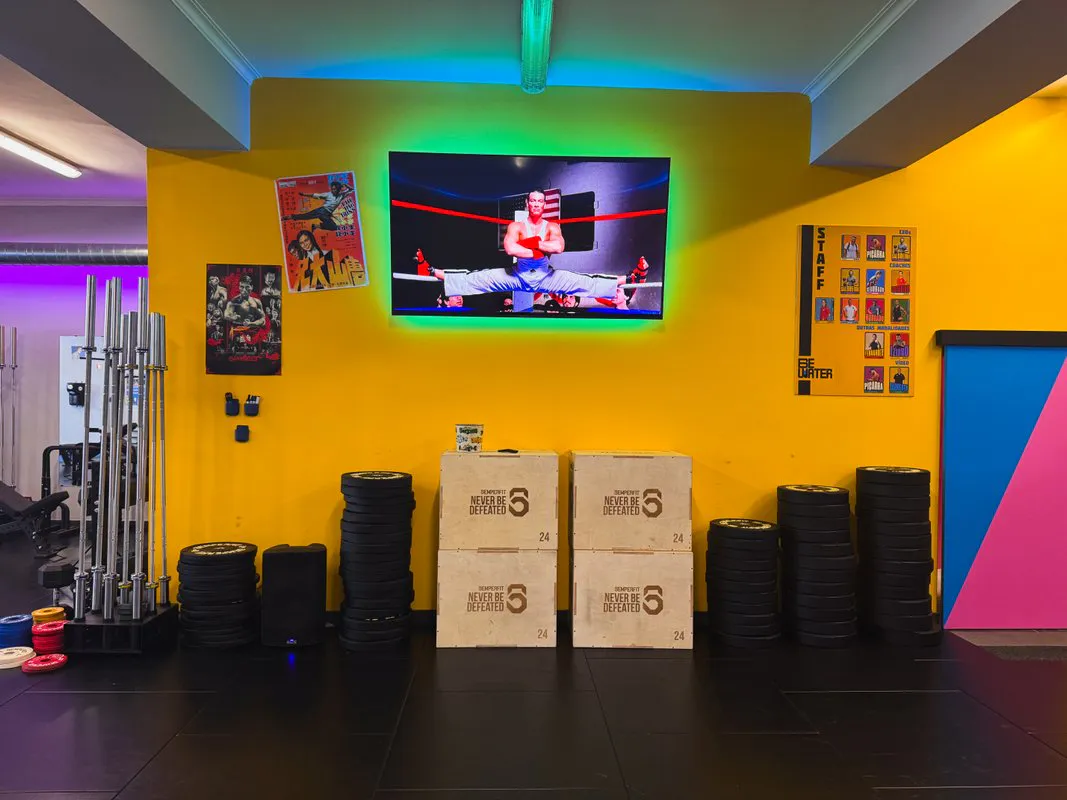
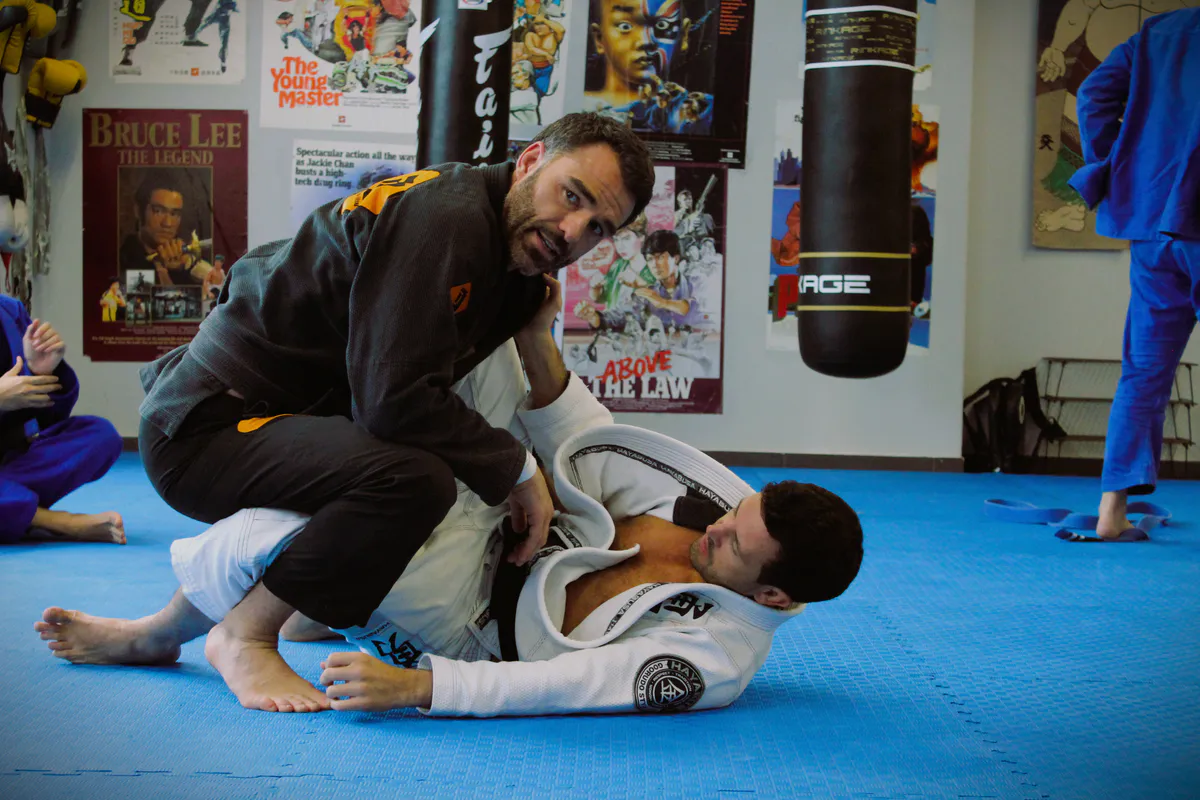
“How long until black belt?” It’s one of the first questions we hear from anyone starting Jiu-Jitsu. The short answer: years. The full answer is more interesting — because the BJJ belt system is one of the most demanding in all of martial arts, and that’s exactly what gives it value. In this article we explain the belt order, the typical time at each one, what counts for promotion and how grading works at Be Water.
The belt order: white, blue, purple, brown, black
In Brazilian Jiu-Jitsu, the adult path has five belts:
- White — the survival belt. You learn the fundamental positions, how to defend yourself and how not to waste energy. Everyone went through it, including every black belt you know.
- Blue — you now have a solid technical base: defences, escapes, a few submissions that work against real resistance. It’s the belt where most practitioners quit — and where persisting pays off most.
- Purple — the halfway point. You start building a personal game, chaining positions together and anticipating your opponent instead of reacting. A purple belt already helps develop the newer people on the mat.
- Brown — refinement. The technique is there; now you sharpen details, timing and pressure. It’s the antechamber of black.
- Black — not the end, a new beginning. The black belt has its own degrees, which keep accumulating over decades of practice and teaching.
Between belts there are degrees (the “stripes”), up to four per belt. They mark progress within each stage — because spending two years at the same belt without any milestone would be hard on anyone.
How long each belt takes
There is no fixed table — it depends on training frequency, age, sporting background and consistency. But training regularly (2 to 3 times per week), the honest reference is this:
| Belt | Typical time |
|---|---|
| White → Blue | 1 to 2 years |
| Blue → Purple | 2 to 3 years |
| Purple → Brown | 1.5 to 2 years |
| Brown → Black | 1 to 2 years |
Do the maths and a BJJ black belt typically takes 8 to 12 years. Compare that with other martial arts, where a black belt is possible in 3 or 4 years, and you understand why the BJJ black belt carries the weight it does.
A warning we give everyone: comparing your journey with the person next to you is a recipe for frustration. Some people train every day, some did judo or wrestling before, some are 20 and some are 45. The only journey that matters is yours.
What counts for promotion
Promotion in Jiu-Jitsu isn’t an exam marked on a calendar. Your professor promotes you based on what they see on the mat, week after week. The essential criteria:
- Mat time — there’s no shortcut around hours of training. Consistency is worth more than occasional intensity.
- Technique against resistance — knowing a technique in the air isn’t enough; it has to work in sparring against partners who genuinely resist.
- Behaviour and attitude — how you train with newer people, how you look after your training partners, how you represent the team.
- Competition — it helps, but it’s not mandatory. There are excellent graded belts who never competed. What competition gives you is condensed real pressure; the same development happens on the mat, just more slowly.
What about kids?
The children’s system is different: between white and the adult belts there are the grey, yellow, orange and green belts, designed to follow development from ages 4 to 15. From 16, the practitioner transitions to the adult system — typically to blue, depending on level.
The belt is not the goal
It sounds contradictory in an article about belts, but it’s the most important lesson: those who train for the belt quit; those who train for the training get there. The belt is a consequence of showing up on the mat for years — not the reason you show up.
It’s also the philosophy of the house: adapt, persist, be like water. If you’re thinking about starting, our Jiu-Jitsu for beginners article explains everything you need for your first class, and the guide on which discipline to choose helps you fit BJJ into the rest of your training.
Grading at Be Water: lineage and standards
At Be Water, Jiu-Jitsu and promotions are led by Master Alexandre Izidro — 6th degree black belt, with over 25 years of experience, former professional fighter, 3rd at the World Championship and Cage Warriors champion. A belt awarded by a master with this lineage means exactly what it should mean.
Jiu-Jitsu classes run throughout the week:
| Type | Days | Time |
|---|---|---|
| No-Gi | Monday, Wednesday and Friday | 11:00 |
| No-Gi | Monday, Wednesday and Friday | 19:30 |
| GI | Tuesday and Thursday | 12:30 |
| Open Mat | Sunday | 11:00 |
See the full schedule for all disciplines.
How to start
Your black belt starts with a free trial class. Book via WhatsApp (933 869 791) or through the website form. You don’t need a gi for your first class — comfortable sports clothing is enough.
Plans start at €64.90/month, with no lock-in contract, and include access to all disciplines: Jiu-Jitsu, Muay Thai, boxing and functional training. To know what to expect on day one, read what your first class at Be Water is like.
Be Water Lisboa — Av. do Brasil 7, Campo Grande. Monday to Friday 06:30–21:00, Saturday 10:00–13:00, Sunday 11:00–12:00 (Open Gym + Open Mat).
— Be Water Team