
Jiu-Jitsu, No-Gi & Grappling in Lisbon
BJJ, Submission Grappling & No-Gi — Free Trial Class
Jiu-Jitsu & Grappling in Lisbon — The Art of Making Less Do More
Jiu-Jitsu (BJJ) is the art of grappling and submission — No-Gi and GI — in Lisbon, at Be Water. Developed from Judo and Japanese Jiu-Jitsu, Brazilian Jiu-Jitsu is based on a simple but powerful principle: technique and leverage beat brute force. A smaller person, with the right technique, can control and submit a much stronger opponent.
Our Jiu-Jitsu and Grappling classes are led by Master Alexandre Izidro — 6th degree black belt with over 25 years of experience, former professional fighter and 3rd place at the World Championship. He is one of the most respected names in BJJ and submission grappling in Portugal.
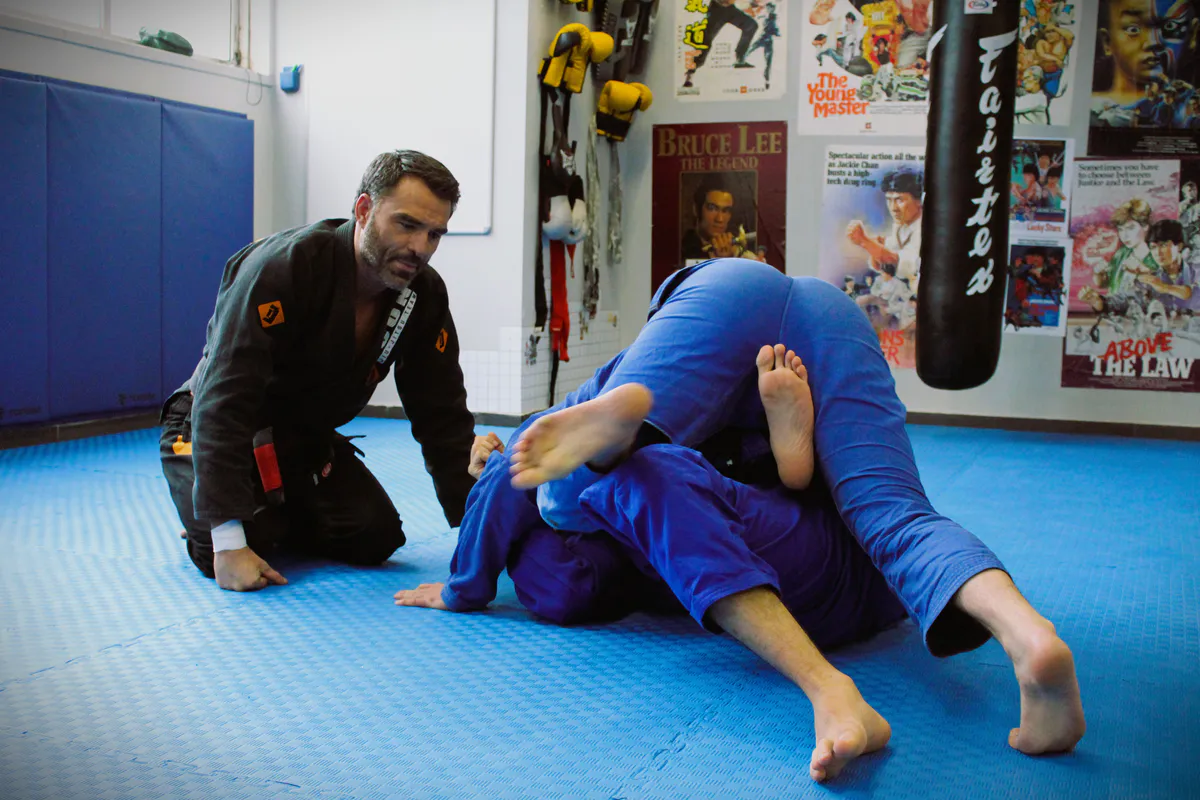
GI, No-Gi & Grappling — What's the difference?
At Be Water we practise both variants of Jiu-Jitsu — GI and No-Gi (grappling without the kimono) — so your submission and grappling game is truly complete.
Jiu-Jitsu GI (with kimono)
GI is the traditional form of Jiu-Jitsu. The kimono is part of combat — you use the grips on the fabric to control, sweep and submit your opponent. The pace is more technical and deliberate, and the leverage principles are at their purest. It's the best entry point for beginners.
No-Gi / Grappling (without kimono)
No-Gi is grappling at its most dynamic. Without the kimono, the game gets faster and more physical — you work with clinch, wrist control and neck ties. This style of submission grappling is the closest to MMA and develops a solid athletic base. Practised with shorts and rash guard.
Open Mat
On Sundays (11:00am) we have Open Mat — free training and sparring with no structured class. Ideal for consolidating technique, testing what you've learned during the week and interacting with practitioners of all levels.
Jiu-Jitsu & No-Gi Grappling Schedule in Lisbon
| Modality | Days | Time |
|---|---|---|
| GRAPPLING / NO-GI | Monday, Wednesday, Friday | 11:00 AM |
| GRAPPLING / NO-GI | Monday, Wednesday, Friday | 7:30 PM |
| JIU-JITSU GI | Tuesday, Thursday | 12:30 PM |
| OPEN MAT | Sunday | 11:00 AM |
Jiu-Jitsu classes at Be Water run throughout the week, with morning and evening options to fit your schedule.
All our plans give access to Jiu-Jitsu classes. You can practise every day if your plan is Elite, or choose the days that best fit your week with the Rise and Starter plans.
See full schedule →What you'll develop in Jiu-Jitsu & Grappling classes
Contrary to what many think, Jiu-Jitsu and grappling are not just martial arts. They're a complete system of physical and mental development, with benefits that extend well beyond the mat.
Physical level
Jiu-Jitsu classes in Lisbon at Be Water work flexibility and joint mobility, full-body functional strength, cardiovascular conditioning (sparring is extremely demanding), motor coordination and body awareness.
Technical level
You'll learn fundamental positions like guard, guard passing, mount and back, submissions like chokes and joint locks, escapes and reversals, and reading your opponent — the "human chess".
Mental level
Jiu-Jitsu teaches humility, resilience and problem-solving under pressure. It's common to hear practitioners say the mat made them better people.
Your coach: Alexandre Izidro
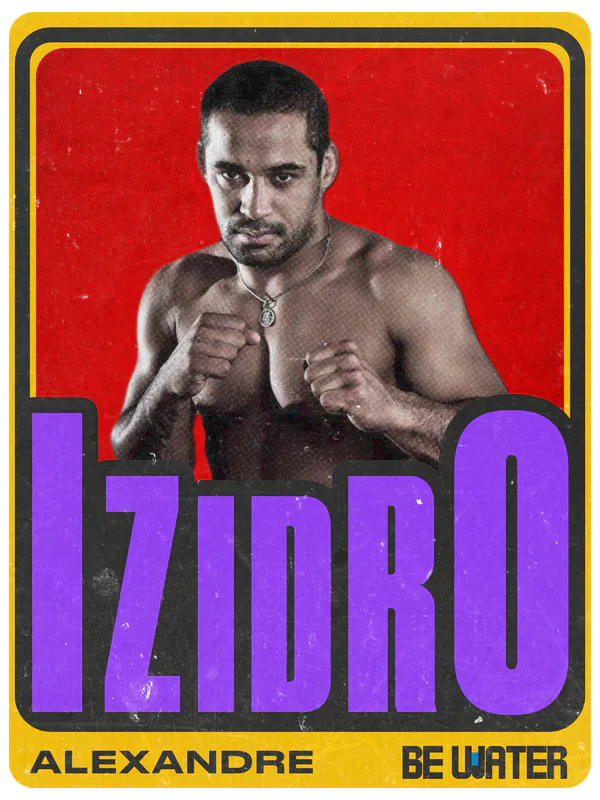
Alexandre Izidro is a Jiu-Jitsu Master with a 6th degree black belt — one of the highest ranks that exist in the modality. Founder of Icon Jiu-Jitsu Lisbon, he has over 25 years of experience in teaching and competition.
As a competitor, he placed 3rd at the World Championship and was Cage Warriors Champion — one of the most prestigious MMA organisations in Europe. As a teacher, he is known for a patient, rigorous pedagogy accessible to all levels.
Training with Alexandre is not just learning Jiu-Jitsu. It's having access to decades of knowledge distilled into a methodology that works for everyone — from beginner to competitor.
Gallery
Who are Jiu-Jitsu & Grappling classes at Be Water for?
For everyone — literally. You don't need prior martial arts experience, to be athletic, or to have any special physical condition.
Alexandre and the team adapt training to your level. In the first months, the focus is learning fundamental positions safely, without pressure for intense sparring. Progress is gradual and consistent.
At Be Water, Jiu-Jitsu is practised by people who had never done any combat sport, athletes from other modalities looking to complement their preparation, and experienced practitioners who want to elevate their level with a reference master.
Try Jiu-Jitsu & Grappling at Be Water
Fill out the form and we'll get in touch to schedule your free Jiu-Jitsu trial class!
See Prices →Frequently Asked Questions about Jiu-Jitsu & Grappling in Lisbon
Do I need a kimono to start?
You don't need to buy a kimono immediately. For the first trial class and the first few weeks, comfortable sports pants and a t-shirt are enough. For No-Gi classes, you always wear sports clothes. When you decide to continue, our staff will help you choose the right kimono.
Is it dangerous for beginners?
Jiu-Jitsu has one of the best safety reputations among martial arts. At Be Water, sparring with beginners is always controlled and supervised. You learn to "tap" (yield when in a submission position) before doing any sparring. Athlete safety is our priority.
Can I compete in the future?
Yes. If you're interested in competition, Alexandre has extensive experience preparing competitors. It's not mandatory — many practitioners never compete and progress greatly — but the option is available.
What's the difference between GI and No-Gi (Grappling) for a beginner?
For beginners, we recommend starting with GI. The kimono slightly slows the pace and allows for a more technical learning of fundamental grappling principles. After a few weeks of GI, No-Gi (submission grappling) becomes much more natural.
How long does it take to get a blue belt?
Progression in Jiu-Jitsu is individual. With consistent training (2-3 times a week), most practitioners reach blue belt within 1 to 2 years. More important than the belt is genuine development — and that happens from day one.