Muay Thai is the national martial art of Thailand. It uses 8 points of contact: fists, elbows, knees and shins. If you’ve never trained, hesitating is normal. The questions we hear are almost always the same: how does a class work, will I get hit on my first session, do I need to be fit to start. Let’s go through them.
What Muay Thai is
A striking martial art that combines punches, kicks, knees, elbows and clinch (standing grappling). Compared to kickboxing, it has more variables: kickboxing uses 4 weapons (hands and feet), Muay Thai uses 8 (adds elbows and knees) and includes real clinch work.
Compared to boxing, which we cover in boxing for beginners: boxing specialises in two weapons, with depth in hand work, head movement and footwork. Muay Thai works more distances and has greater technical variety. They’re separate disciplines, with different logics.
One important note: Muay Thai isn’t a cardio class with a bag, nor a “fitness boxing” format. It’s a martial art with specific technique and real progression.
What you’ll learn in the first months
The first months are about building a technical base. Mechanics first, then application on the bag and on pads. The programme covers:
- Stance and guard: how to position the body to generate power and protect the face
- Fundamental punches: jab, cross, hook, uppercut, with the same technical demand as boxing
- Base kicks: the teep (push kick), the low kick (to the leg) and the roundhouse. Hip mechanics, rotation and balance
- Knees and elbows: close-range weapons, drilled in the air and on pads before any contact
- Basic clinch: neck posture, control, footwork. The most technical component
- Defences: check against the kick, parry against the punch, cover, evasion
The learning curve is long by design. Practitioners with 10 years still refine timing and mechanics in the same techniques you’ll learn in your first month.
What a class at Be Water looks like
The coaches are Diogo Calado and Rui Carvalho, world and European champions, with decades of competitive experience and coaching practitioners from day one to the ring. Classes run:
| Days | Time |
|---|---|
| Tuesday & Thursday | 7:00am |
| Tuesday & Thursday | 7:15pm |
| Friday | 6:30pm |
See the full schedule of all modalities.
Typical session structure:
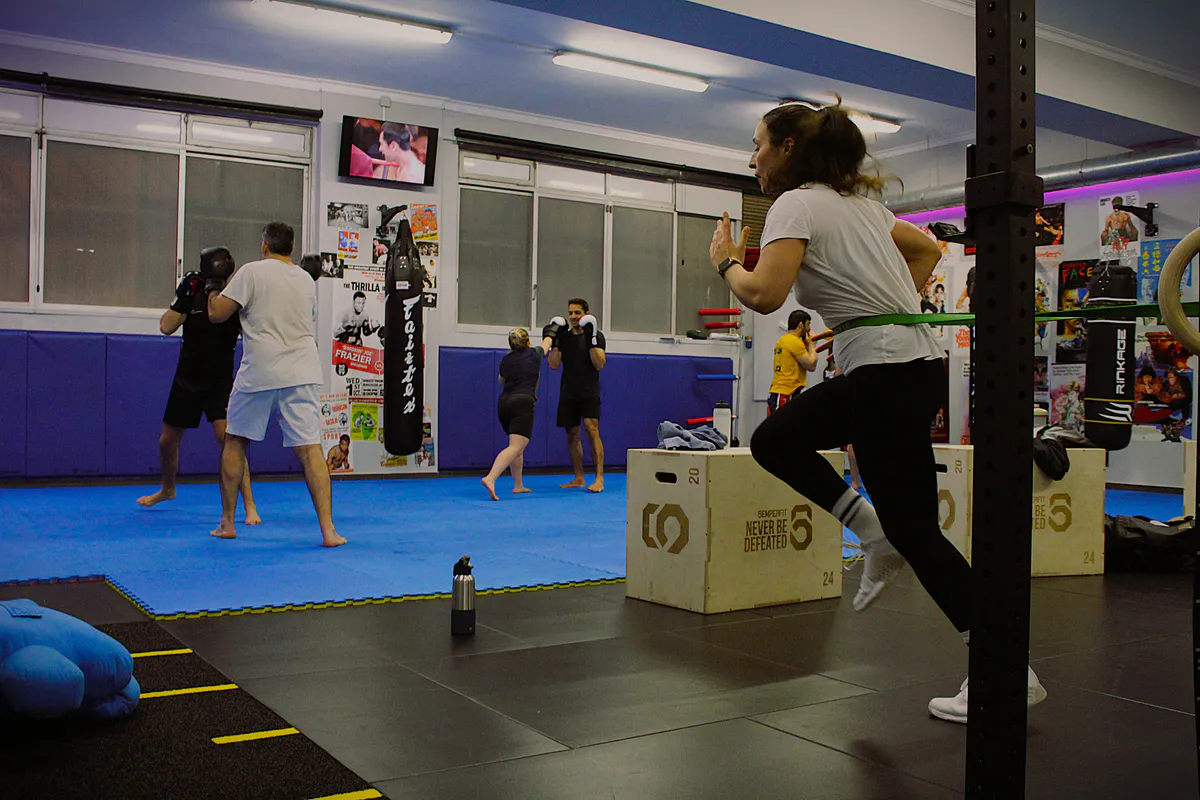
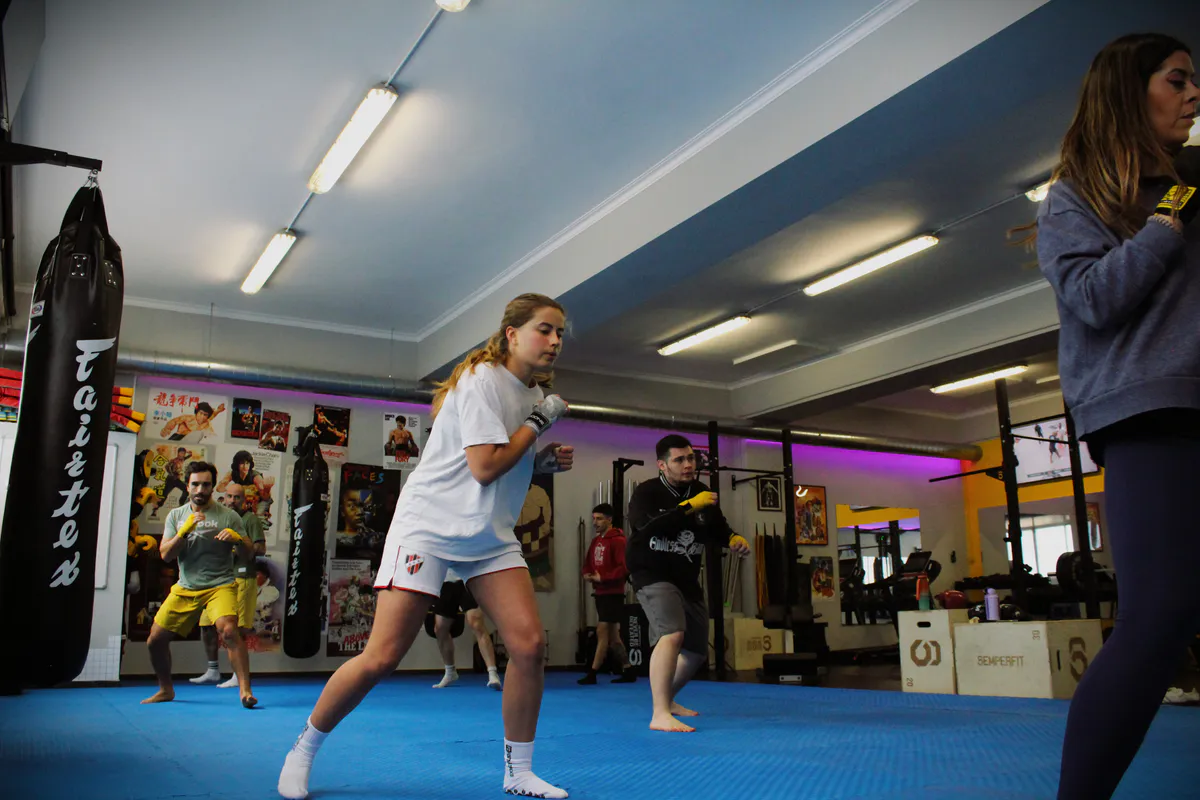
- Warm-up and mobility: joint and cardiovascular preparation specific to striking (shoulders, hips, ankles)
- Base technique: stance, guard, footwork, strike mechanics, with continuous correction
- Bag work: applying technique with power, timing and rhythm
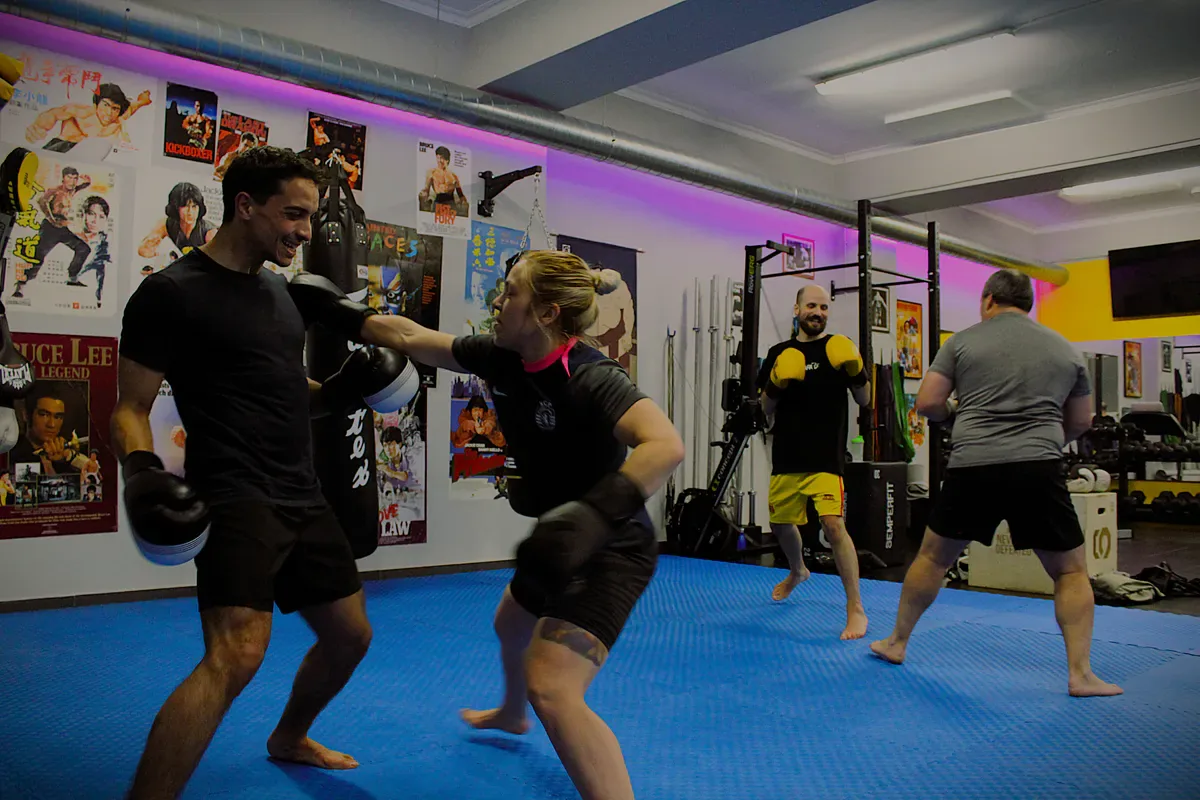
- Pad work in pairs, with more experienced training partners or with the coach. This is where technique gets tested under real pressure
- Final conditioning: short, high-intensity rounds
Sparring isn’t mandatory and doesn’t happen in the first weeks. It’s only introduced when the practitioner is technically prepared, and always in a controlled setting. Most classes are technique, bags and pads. When sparring comes in, it’s by choice.
Muay Thai or boxing?
One of the most common questions we get. The two modalities are complementary, not competing.
Muay Thai works 8 weapons, more distances and clinch. It has greater technical variety and more body contact. Boxing specialises in two weapons (hands), with depth in head movement, close-range footwork and timing. Both demand precision, but boxing’s is more surgical.
Be Water plans give access to both modalities at no extra cost. Many practitioners train both. Combining boxing with Muay Thai builds a complete striker: boxing sharpens the hands and the defence, Muay Thai adds leg, knee and clinch.
If you’re still in doubt, pick the one that interests you most up front. You can adjust later.
Common questions
“Will I get hit on my first class?” No. The first weeks are technique, bags and pads. There’s no facial contact for beginners. Sparring comes later, always by choice.
“Do I need to be flexible to start?” No. Flexibility develops with practice. Initial kicks are low and mid. In real combat, leg kicks are more effective than high ones anyway.
“Is it only for men?” No. We have practitioners of various ages and genders in regular classes. Muay Thai’s mechanics make up for raw strength differences, which makes the modality naturally accessible.
“Is it the same as kickboxing?” No. Muay Thai uses elbows, knees and clinch, weapons and distances kickboxing doesn’t work. The cultural roots, the rhythm of the classes and the technique are different.
Do I need to be fit to start?
No. Same answer we give for Jiu-Jitsu, boxing and functional training. Exercises adapt to your level, intensity is managed by the coach, and you progress at your own pace.
With regular practice you’ll notice concrete differences:
- Above-average cardiovascular conditioning within a few weeks
- Integrated functional strength, with hips, core, shoulders and legs working as a chain
- Coordination and timing no gym machine can develop
- Stress management: an intense pad session is a strong mental reset
For more on the impact of training, read the article on the benefits of Muay Thai.
How to start
The first class is free. Book it on WhatsApp (933 869 791) or via the contact form on the site. Arrive 15 minutes early, bring comfortable sportswear and a water bottle. Gloves and equipment are on us for the first session.
Plans start at €64.90/month, no lock-in, with access to all modalities: Muay Thai, boxing, Jiu-Jitsu and functional training. For more on what to expect from your first day, see what your first class at Be Water is like.
Be Water Lisboa — Av. do Brasil 7, Campo Grande. Monday to Friday 6:30am–9pm, Saturday 10am–1pm, Sunday 11am–12pm (Open Gym + Open Mat).
— Be Water Team