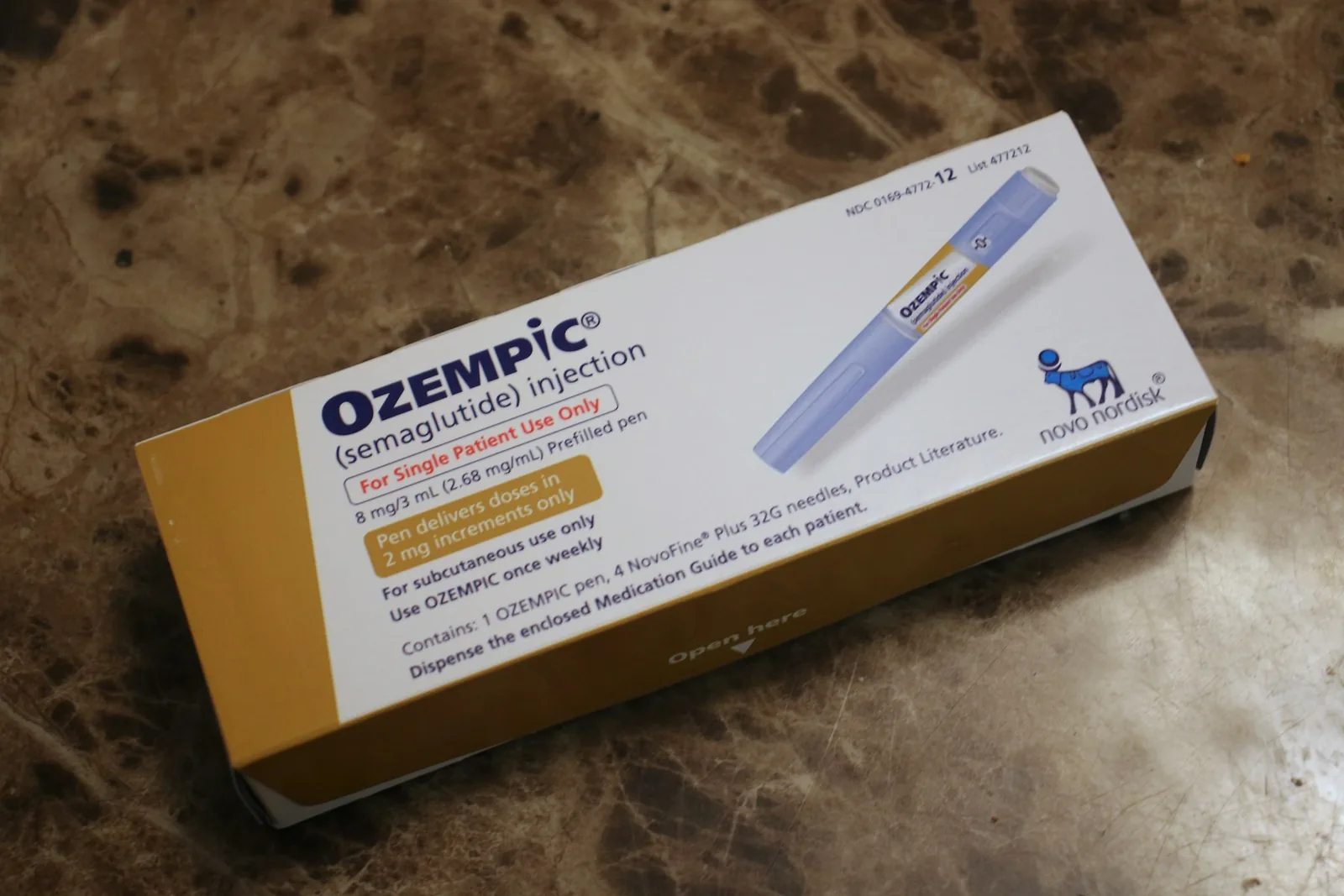
Are you on Mounjaro, Ozempic or Wegovy? By now you’re probably seeing results. The scale moves, clothes are looser, and there’s a rare feeling of finally having your appetite under control. Good.
But there’s a detail that often doesn’t come through clearly in the doctor’s office, and that the international press has been documenting for a while now: a meaningful share of the weight you’re losing on these drugs isn’t fat. It’s muscle. And without strength training, that lost muscle can quietly undo everything you’re trying to build.
This article isn’t here to scare you off the medication. It’s here to fill in what’s missing from the conversation.
What these drugs actually do
Mounjaro (tirzepatide), Ozempic and Wegovy (semaglutide) are GLP-1 receptor agonists. In plain language: they mimic a hormone your body already makes that regulates appetite and satiety. You eat less without having to fight hunger all day. That’s why they work so well.
The catch is that fast weight loss doesn’t distinguish between fat and muscle. The body loses what you have — and you have both.
The part nobody warns you about
The international press has been clear on this. The Cleveland Clinic published a piece spelling out that without strength training, a significant chunk of the weight lost on GLP-1s is lean mass — muscle and bone — and that “once you start losing muscle mass, it becomes very difficult to gain it back.” It’s not an isolated view: the Harvard T.H. Chan School of Public Health cites estimates of roughly 25% of weight lost on GLP-1s coming from lean mass, and explicitly recommends 1 to 1.5 grams of protein per kilo of body weight per day to mitigate it.
KFF Health News put it even more bluntly: “35% to 45% of GLP-1 weight loss is not fat” but rather “lean mass including muscle and bone.” One patient in that piece described watching her “muscles melt away.”
And there’s a visual side effect you’ve probably already seen in the press: the so-called “Ozempic face” — the hollowed, prematurely-aged look — is largely the result of that loss of subcutaneous lean tissue. It’s not just cosmetic. It’s an outward sign of what’s happening inside.
Why losing muscle is bad, even while losing weight
Some people hear this and think: “fine, I lost a bit of muscle, but I’m leaner.” It’s not that simple. Three concrete problems:
- Slower metabolism. Muscle is metabolically active — it burns calories even at rest. Losing it means your body uses less energy 24 hours a day. The moment you stop the medication (and most people eventually do), you regain weight more easily, because now you need less food to maintain it.
- Weight regain is the rule, not the exception. KFF Health News, in the article above, notes that stopping these drugs “usually means regaining weight and losing the associated health benefits, including lower blood pressure, cholesterol, and A1c.” If you reach that point with less muscle than you started with, you end up in worse shape than before.
- Frailty and quality of life. Less muscle means less functional strength. Climbing stairs, lifting groceries, playing with your kids — all harder. In older people, this has a clinical name: sarcopenia. And it accelerates every bad thing aging brings.
The takeaway echoed across these pieces is consistent: the medication is a tool for changing your lifestyle, not a substitute for one. If you don’t change what’s around the medication, you’ll regain everything you lost.
The fix isn’t complicated (but it isn’t optional)
The good news: the literature is essentially unanimous on what to do. Strength training and enough protein.
The Cleveland Clinic recommends a combination of:
- 150 minutes of moderate-intensity exercise per week (about 30 minutes, 5 times a week), OR
- 75 minutes of vigorous exercise per week, PLUS
- Strength training at least twice a week, ideally covering all major muscle groups
The strength piece is the non-negotiable part. It’s the signal that tells your body: “don’t break this muscle down, I still need it.” Without that signal, the body treats muscle as expensive tissue to keep around when you’re eating very little — and ditches it.
The protein piece goes with it: the recommendation that appears in every reputable source is roughly 1 to 1.5 grams of protein per kilo of body weight per day. For an 80 kg person, that’s 80 to 120 grams a day. Hard when you’re already eating less — doable with planning.
”But I have zero energy — I can barely train”
This is the most common complaint, and it makes sense: you’re eating far less, you have less fuel. The answer isn’t to force an hour of HIIT on day one. It’s to start where you are.
The Cleveland Clinic piece explicitly recommends starting with 10 to 15 minutes a day and building from there. You don’t need to be a hero. You need to be consistent.
In practice:
- Weeks 1–2: 20–30 minute walks, 4–5 times a week, plus 2 short strength sessions (30–40 minutes) with light loads, focused on learning the mechanics.
- Weeks 3–6: keep the walks, bump strength training to 3 times a week, start progressing the loads.
- From there: your cardiovascular system can handle intensity. Add more demanding functional work, or try a martial art like boxing or Muay Thai for the aerobic side — with strength sessions as the backbone.
The order matters. Strength first. Conditioning after.
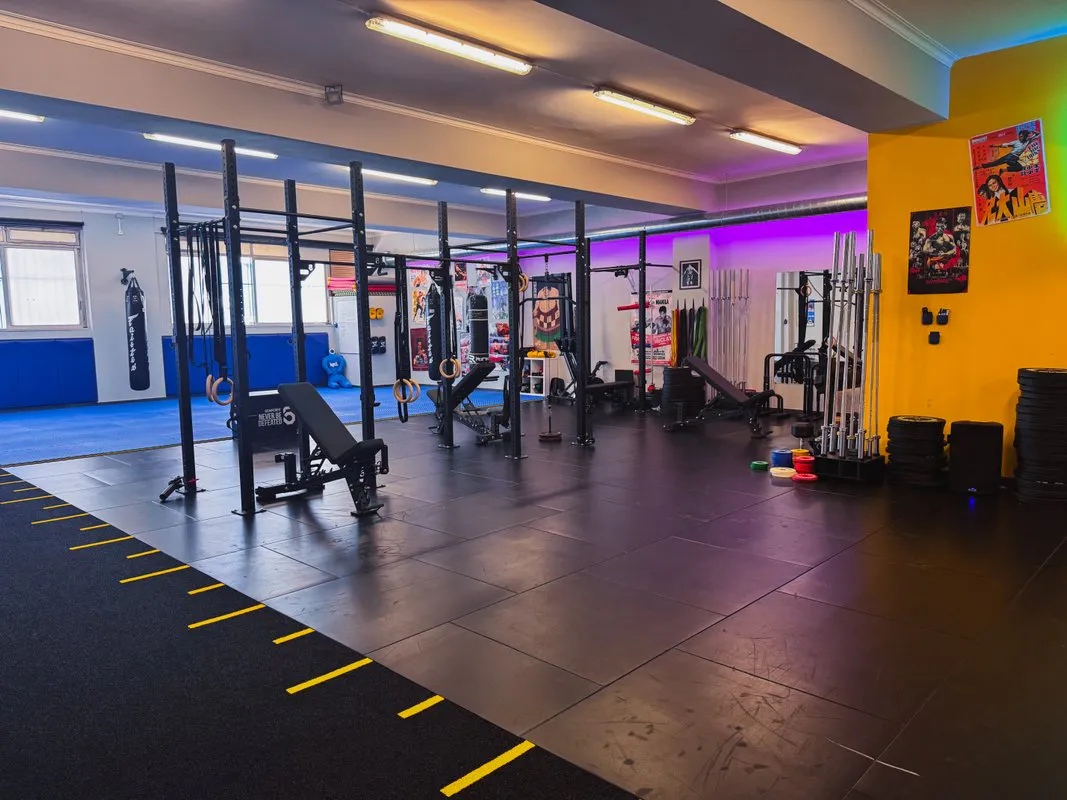
Why Be Water makes sense for this phase
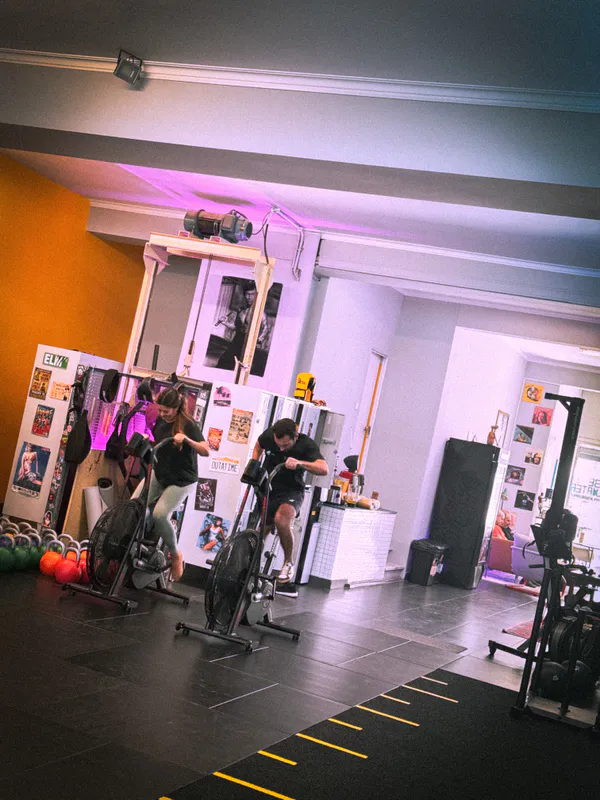
There are concrete reasons to pick a place with small classes and a coach next to you, rather than signing up at a machine-filled gym and trying to figure it out alone:
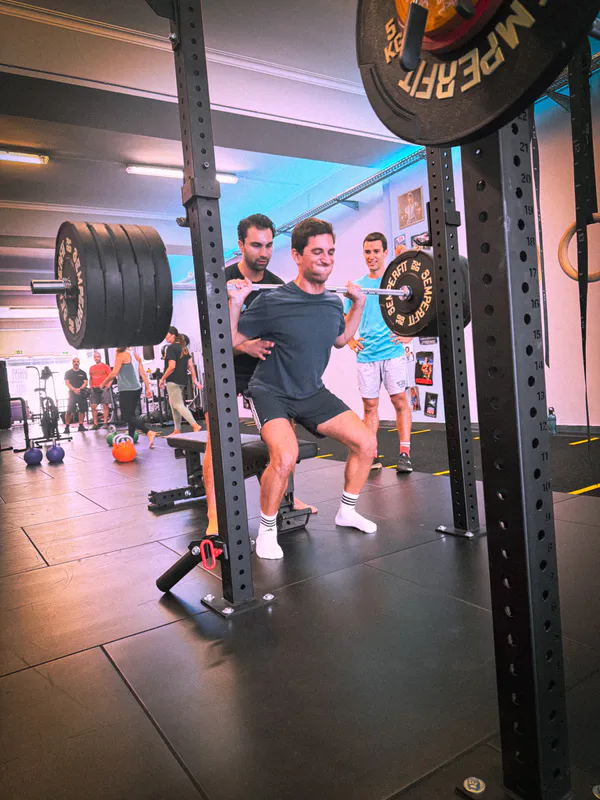
- Correct form from day one. You’re learning movement patterns that will stay with you for years. Learning them badly now sets up injuries later. In our functional training classes, the coach is literally next to you correcting.
- Loads adapted to your level. There’s no shame in starting with light kettlebells. There is shame in hurting yourself trying to prove something.
- Structure, not willpower. Booked classes, fixed schedules, coaches who know your name. People on GLP-1s have often struggled for years with motivation — you don’t need more willpower-dependency. You need a system that works on the bad days too.
- Access to all modalities. Once your body is more conditioned and you want variety, boxing, Muay Thai and Jiu-Jitsu are included in the same plan. There’s nothing quite like discovering, at 45, that you actually love hitting pads.
If you’ve read our piece on functional training vs CrossFit, you know we argue for technique first, intensity second. For someone on GLP-1s, that order matters even more.
What NOT to do
To avoid misunderstandings:
- Don’t train on a long fast. You’re already in a significant calorie deficit; stacking fasting on top of intense training is a recipe for dizziness.
- Don’t start with 6 sessions a week on day one. You’ll last two weeks and quit. Start with 2–3 sessions and build up.
- Don’t compare your progress with someone who isn’t on a GLP-1. Your experience is different. Measure yourself against yourself: strength going up, energy showing up, clothes fitting better.
Three-line summary
- GLP-1s make you lose weight — including muscle.
- Without strength training and enough protein, you’re likely to regain the weight (without the muscle) when you stop.
- Strength training 2–3 times a week + adequate protein turns these drugs into a sustainable tool, not a rollercoaster.
Start now
Book a free trial class on WhatsApp (933 869 791). Mention in the message that you’re on a GLP-1 medication — we’ll dial in the intensity of your first session so you leave feeling good, not wrecked. Arrive 15 minutes early, bring comfortable clothes, and leave the rest to us. Plans from €64.90/month, no lock-in, with access to all modalities.
Be Water Lisboa — Av. do Brasil 7, Campo Grande. Monday to Friday 6:30am–9pm, Saturday 10am–1pm, Sunday 11am–12pm (Open Gym + Open Mat).
— Be Water Team