Here’s a number worth remembering: from age 30 onwards, you lose 3% to 8% of muscle mass per decade — without doing anything to deserve it. After 50, the loss accelerates. By 70, most people can no longer get off the floor without leaning on something.
The good news: it’s fully reversible. And, contrary to what most people assume, starting late actually works better than just coasting along — because the delta is bigger. The first six months of well-executed strength training, even at 55, deliver the biggest relative gains of your life.
This article is for the 40-something who keeps hearing the word “longevity” everywhere and wants to understand why the scientific literature keeps pointing back to one thing: strength training.
Sarcopenia, in plain language
Sarcopenia is the clinical name for the progressive loss of muscle mass, strength and function that comes with age. It’s not a rare disease or a sentence — it’s what happens by default to anyone who does nothing to stop it.
The average rate is clear: 3% to 8% per decade from 30 onwards. By 60, chances are you’re at half the strength you had at 25. And it’s not just cosmetic: every kilo of lost muscle means slower metabolism, easier visceral fat gain, lower insulin sensitivity, lower bone density, less balance.
For women there’s an additional factor: menopause. Falling estrogen accelerates both bone and muscle loss, which makes the window between 45 and 55 especially critical. It isn’t unfair — it’s physiology. And that’s exactly why the recommendation for women in this phase is more aggressive than for men of the same age.
The 5 wins of strength training after 40
Strength training isn’t vanity at 25. After 40, it’s literally a health insurance policy. Five concrete reasons:
1. Active metabolism
Muscle burns calories 24 hours a day, even while you sleep. More muscle = more fuel burned at rest. Less muscle = harder to maintain weight, easier to accumulate fat, even eating the same as always. That’s why so many people say “I gained weight without eating more” after 40 — it’s not a lie.
2. Bone density (especially for women post-menopause)
Bone adapts to load. When you carry weight, it responds by getting denser. Without that load, it demineralises. Strength training is, alongside vitamin D and calcium, the single most effective intervention against osteoporosis — and it works better than any supplement on its own.
3. Fall and fracture prevention
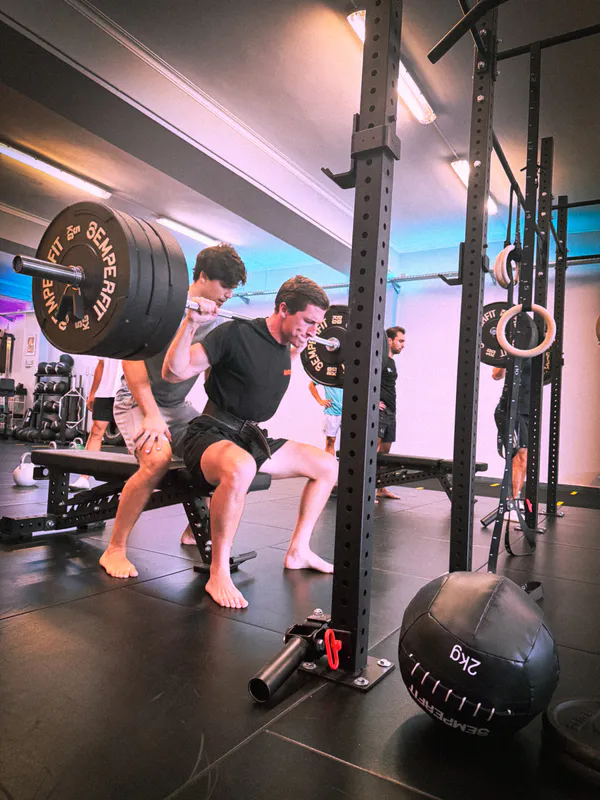
The number one cause of loss of independence in people over 65 is a fall. And the number one cause of falls is weak legs and core. A well-executed squat, repeated for years, is literally the best life insurance there is against ending up dependent on others.
4. Cardiovascular health and insulin sensitivity
Strength training improves blood pressure, cholesterol and insulin sensitivity markers — in some studies as much as or more than pure cardio. For anyone trying to avoid pre-diabetes or blood pressure medication, the barbell matters as much as the treadmill.
5. Cognitive function and mental health
Recent literature is increasingly clear: resistance training is linked to BDNF release (brain-derived neurotrophic factor), better executive function and lower long-term dementia risk. And there’s the immediate piece: most people leave a session feeling better mentally than they came in. It’s not placebo — it’s endocrinology.
”But I’ve never trained in my life”
It’s the line we hear most from people in their 40s, 50s, 60s walking into Be Water for the first time. And the answer is always the same: great. Anyone who’s never trained strength has the fastest, most visible gains of their life ahead of them — the famous “beginner gains” are as real at 55 as at 25.
The difference isn’t capability. It’s the starting point and the early curve. At 25 you could get five things wrong in parallel and still get away with it. At 50, starting wrong costs you — a lower back injury while learning the deadlift on your own can cost you six months. The limit isn’t age. It’s how you start.
What counts as “strength training” (and what doesn’t)
Before going further, three common confusions to clear up:
- It’s not lifting huge weights. “Strength” here means progressive resistance — it can be a barbell, an 8 kg kettlebell, a resistance band or your own bodyweight. What matters is that the resistance increases over time.
- Yoga and pilates don’t replace it. They help — mobility, control, core. But they don’t generate the stimulus needed to slow sarcopenia. They’re complements, not substitutes.
- Walking isn’t strength training. Walking matters (cardiovascular, mental health, longevity), but it doesn’t preserve muscle mass. It’s cardio. Different things, both necessary.
The minimum effective dose, according to almost unanimous literature: 2 to 3 strength sessions per week, covering all major muscle groups, with loads that progress over the weeks. It’s not a lot. It is non-negotiable.
How to start without hurting yourself: 3 phases
After 40, the goal of the first months isn’t “get fit” — it’s to build a technical foundation that holds up for decades. Get that right and the rest follows.
Weeks 1-4: movement patterns + light loads
The first phase is pure technique. Learning to squat with a neutral spine, to hip hinge without rounding the lower back, to push and pull with stable shoulders. Light loads, controlled reps, coach next to you correcting. Boring? Maybe. Indispensable? Yes — this is where it gets decided whether you’ll still be training five years from now or whether you’ll have hurt yourself trying to skip steps.
Weeks 5-12: load progression, introducing variation
Once the mechanics are clean, load starts climbing in a structured way. It’s not “load as much as you can stand” — it’s adding 2 kg to the bar each time, week after week, until it stops working. We also introduce variations here: kettlebell swings, weighted lunges, single-arm presses, specific core work.
From 3 months on: integration and challenge
Once your system handles intensity, doors open. This is the phase where it makes sense to add more serious cardio, or try boxing, Muay Thai or Jiu-Jitsu — disciplines that love a body that’s already strong. Strength remains the backbone; the rest is variety and enjoyment.
If you’re on a GLP-1 medication (Mounjaro, Ozempic, Wegovy)
If you’re taking any of these drugs to lose weight, this conversation applies in double dose. The fast weight loss induced by GLP-1s brings a significant share of lean mass — muscle and bone — and it does so at a stage of life where that loss was already happening naturally. Without strength training to push back, it’s a terrible trajectory.
We wrote about this in detail in Mounjaro, Ozempic and exercise: why training isn’t optional — recommended reading if it applies to you.
Why Be Water works for 40+
There are concrete reasons to pick a place with small classes and a coach next to you instead of signing up at a machine-filled gym and trying to figure it out alone — and they multiply after 40:
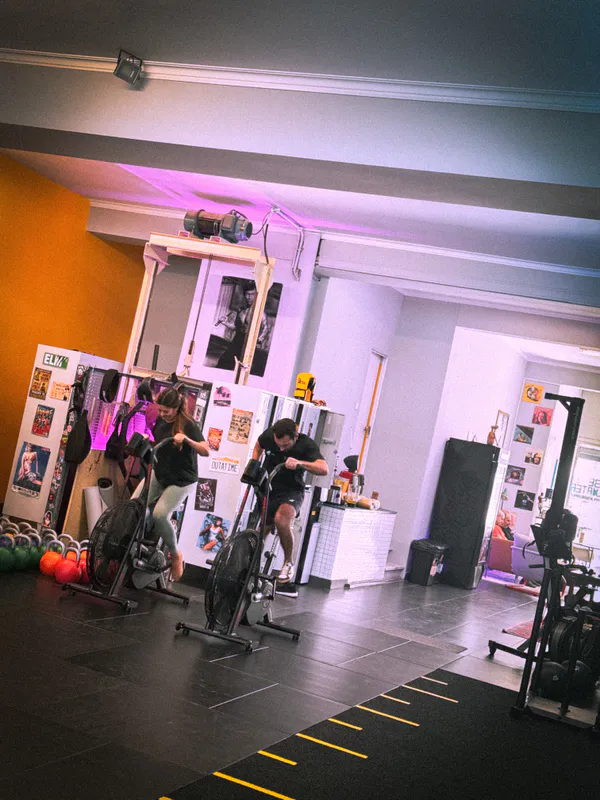
- Correct form from day one. You’re learning movement patterns that will stay with you for 20, 30 years. Learning them badly now is mortgaging your spine. In our functional training classes, the coach is literally next to you correcting.
- Loads adapted to your level. There’s no shame in starting with an 8 kg kettlebell. There is shame in hurting yourself to prove a point.
- No 25-year-olds breathing down your neck. Classes are small and age-mixed — it’s not a factory where everyone does the same. Each person progresses at their own pace. And 50+ practitioners are a meaningful share of our members.
- Structure, not willpower. Booked classes, fixed schedules, coaches who know your name. When you’re 47, have two kids and a 6pm meeting, “I’ll go to the gym when I can” doesn’t work. The 7am Tuesday class does.
- Access to all modalities. Once your body is more conditioned and you want variety, boxing, Muay Thai and Jiu-Jitsu are all included in the same plan. There’s nothing quite like discovering, at 48, that you actually love hitting pads.
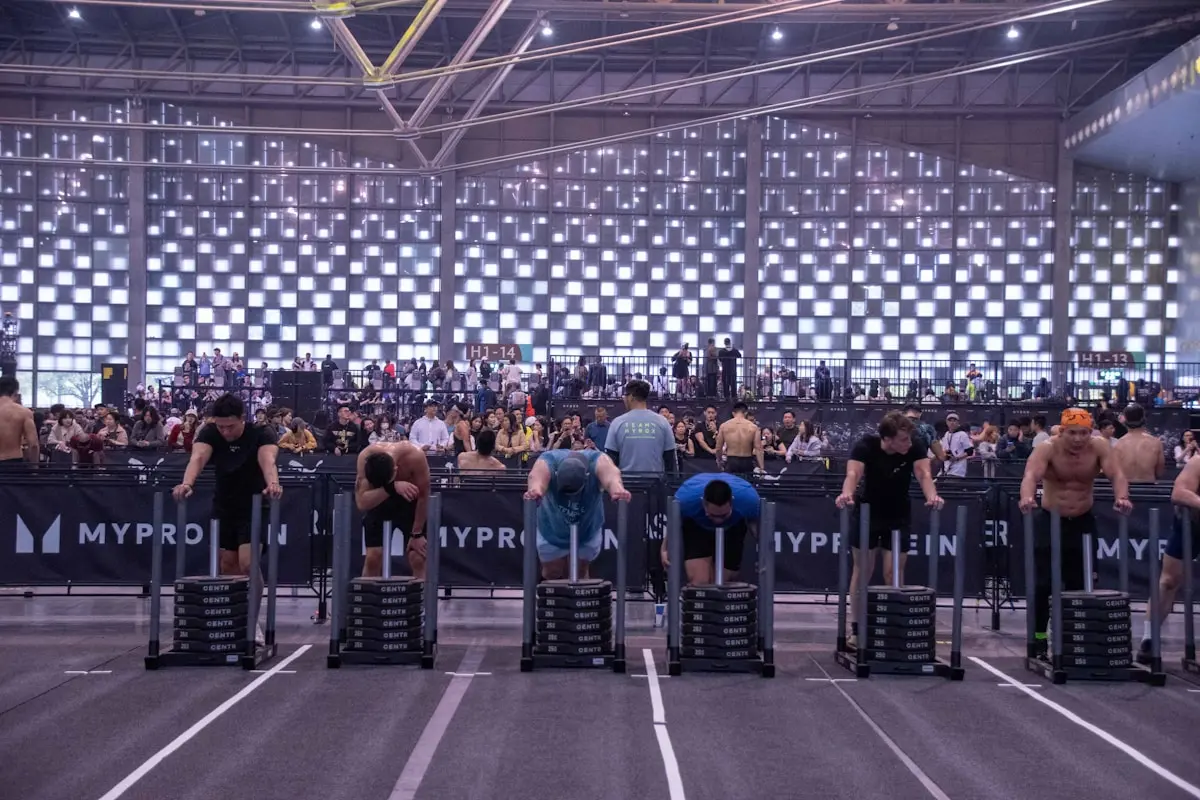
And for those who want to go further: from the second year of training, several of our members compete in events like Hyrox — not to win, but to have a concrete goal. It works.
Three-line summary
- From 30 onwards you lose 3-8% of muscle mass per decade. After 50 it accelerates. By 70 it threatens independence.
- Strength training 2-3 times per week, with progressive load, is the only proven intervention that slows this down.
- After 40 the rule is: technique first, intensity second. Bad strength training costs you — done right, it’s the best health investment you can make.
Start now
Book a free trial class on WhatsApp (933 869 791). If you’ve never trained strength, tell us in the message — we’ll dial in the intensity of your first session so you leave feeling good, not wrecked. Arrive 15 minutes early, bring comfortable clothes, and leave the rest to us. Plans from €64.90/month, no lock-in, with access to all modalities.
Be Water Lisboa — Av. do Brasil 7, Campo Grande. Monday to Friday 6:30am–9pm, Saturday 10am–1pm, Sunday 11am–12pm (Open Gym + Open Mat).
— Be Water Team