Some people only ever train in classes, and some can’t train any other way than alone, headphones in and the plan in their head. Most people sit somewhere in between: they like classes, but every now and then they miss the class time, want to repeat a technique that didn’t stick, or need one more strength session than the timetable gives them.
That’s what Open Gym is for. This article explains how it works at Be Water and, more importantly, how to use it well: what to do when you walk in, three sample sessions ready to follow, and the rules for sharing the space.
What Open Gym is at Be Water
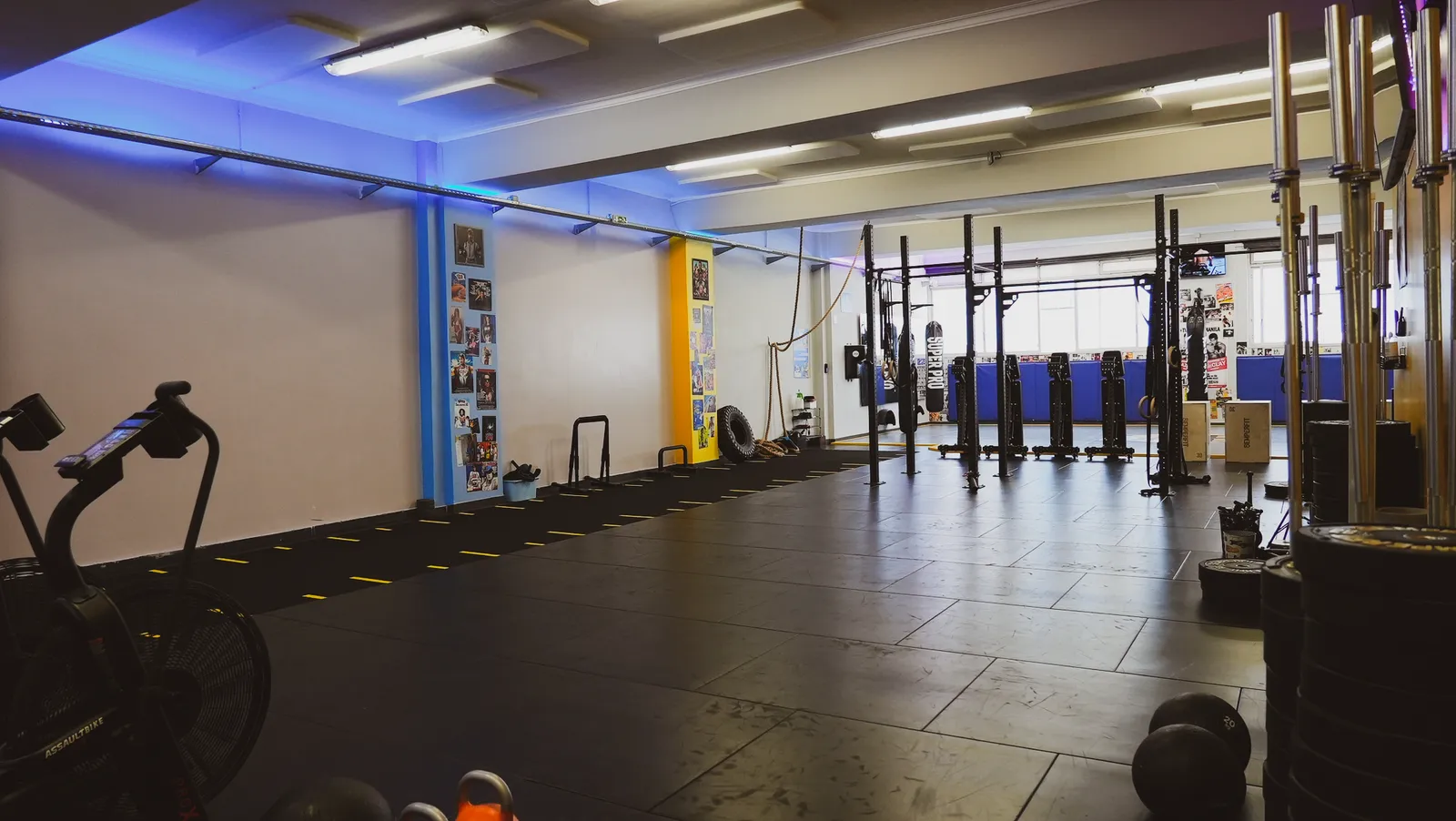
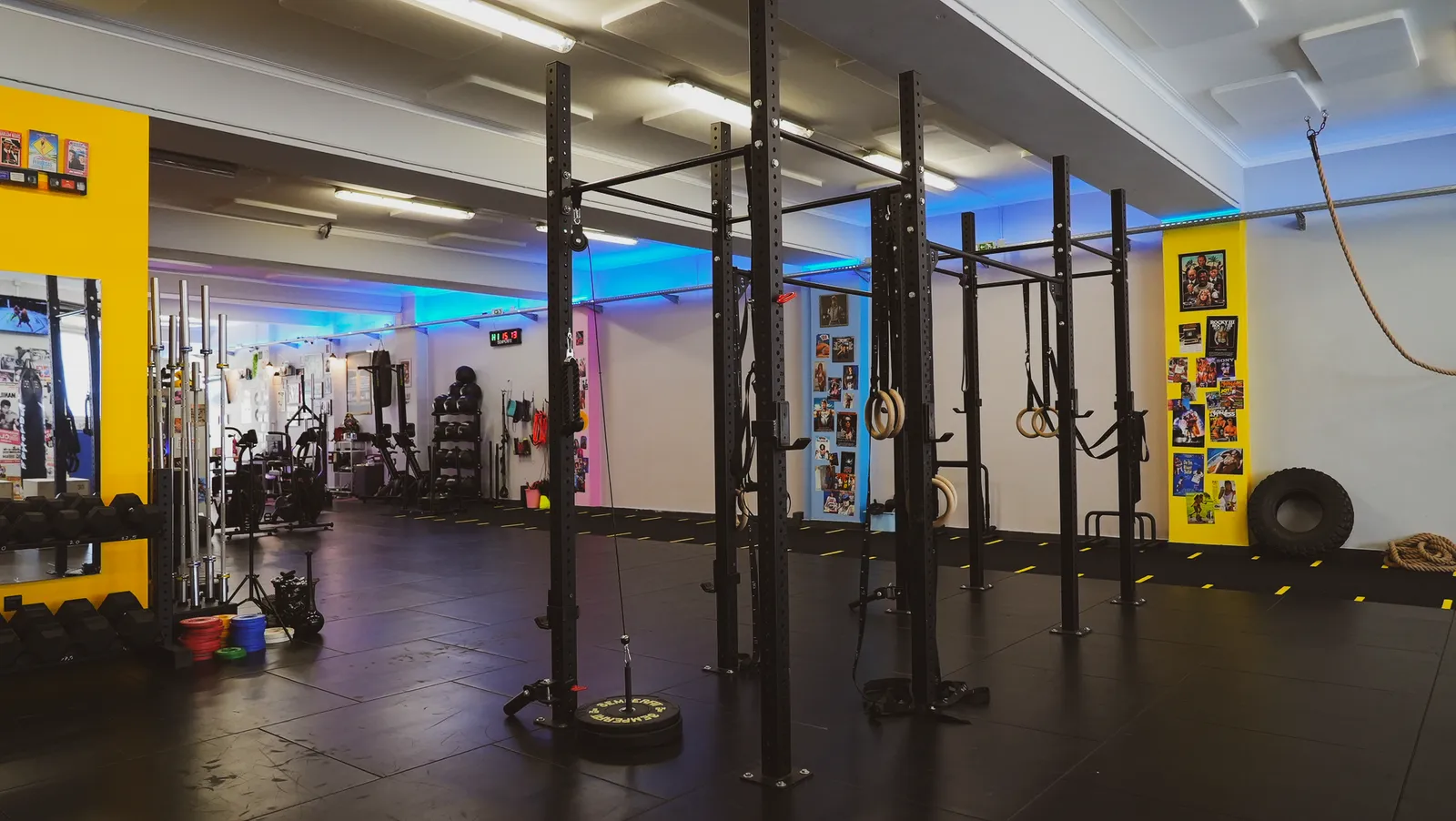
It’s free training, with no class and no coach setting the pace. During Open Gym you have access to the whole space that isn’t being used by a class:
- Functional training area: Olympic bars, dumbbells, kettlebells, medicine balls, plyo boxes, TRX and the rest of the equipment from the Cross-Training classes
- Strength area: racks, benches, bars and plates
- Boxing bags: heavy bags and speed bags
- Mats: for ground drills, mobility and stretching
There’s no coach dedicated to Open Gym, but the team is around and you can ask whenever you have a question about an exercise or a piece of equipment.
Times and booking
| Day | Morning | Afternoon |
|---|---|---|
| Monday, Wednesday and Friday | 11:00 - 12:30 | 16:00 - 18:00 |
| Tuesday and Thursday | 09:30 - 12:30 | 16:00 - 18:00 |
| Sunday | 11:00 - 12:00 | - |
There’s no Open Gym on Saturday. On Sunday, the Open Gym hour runs at the same time as the Jiu-Jitsu Open Mat.
Just like classes, Open Gym is booked in the Be Water app: pick the block and turn up. It’s included in every plan, the drop-in and the packs, at no extra cost.
A useful detail for planning: the morning block overlaps with some classes on the mats (No Gi Jiu-Jitsu at 11:00 on Monday, Wednesday and Friday; boxing at 11:30 on Tuesday and Thursday; Open Mat on Sunday). The rule is simple: if there is a class on the mats, you train in the gym; if there is a class in the gym, you train on the mats. In the 16:00 to 18:00 block there are no classes running at the same time. See the full timetable on the schedule page.
Who it’s for
- People with irregular hours. Shifts, meetings that move, kids. If you can’t guarantee the same time every week, Open Gym gives you a morning block (an hour and a half or three hours, depending on the day) and a two-hour block in the afternoon instead of a class at a fixed time.
- People who want to add to their classes. An extra strength, conditioning or technique session, built around you.
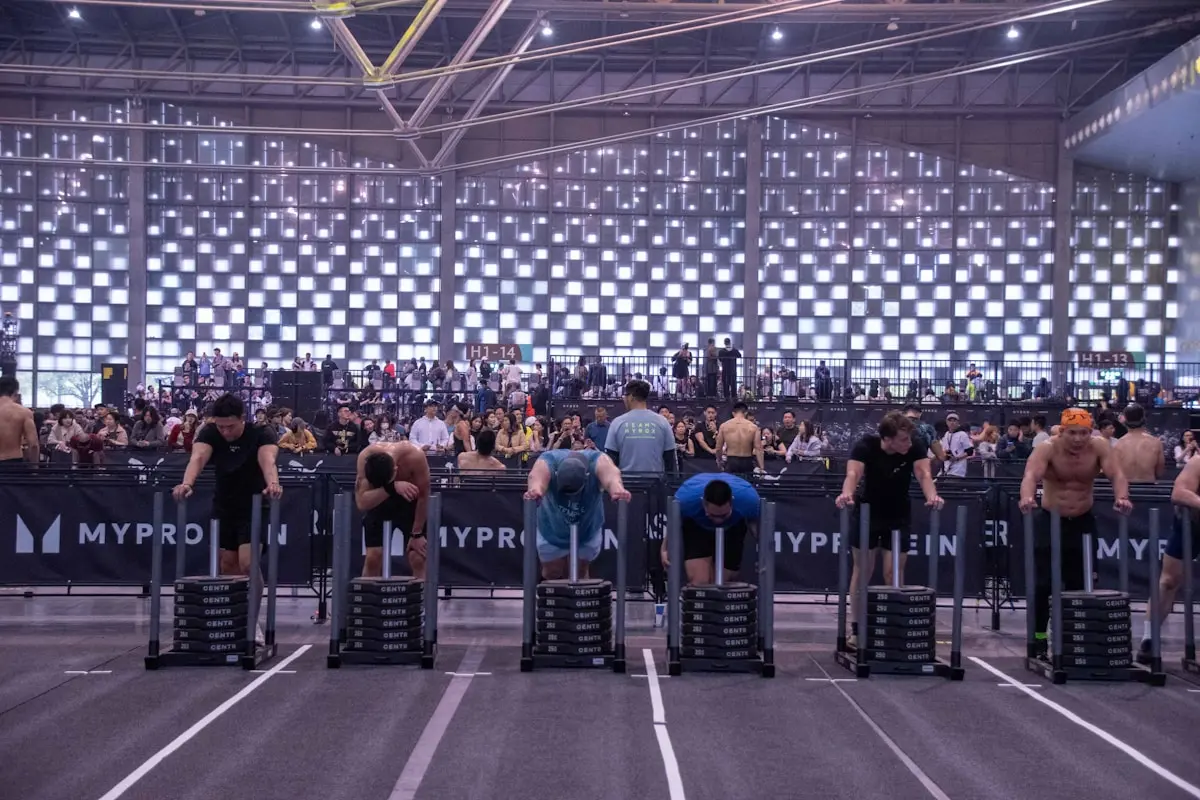
- People preparing for a goal. A Hyrox race, a run, a belt promotion. We wrote about that in training for Hyrox in Lisbon.
- People coming back from a break or an injury who need to work at their own pace without keeping up with a group.
And it’s not the best option if you’re starting from zero. If you’ve never done a barbell squat or a deadlift, learn the movements in a Cross-Training class first, where a coach is there to correct you. Open Gym pays off far more once you know what you’re doing.
The golden rule: walk in with a plan
The most common mistake in free training isn’t training badly, it’s not deciding anything before you walk in. Drifting from machine to machine, doing whatever you feel like, checking your phone between sets, and leaving an hour later feeling like you trained without really training.
Before you leave home, answer three questions:
- What am I training today? Strength, conditioning, technique or recovery. One focus per session.
- Which exercises, sets and reps? Write them down on your phone.
- How much time do I have? 45 well-used minutes are worth more than 90 spent wandering.
And log what you did: loads, reps, times. Without a log you can’t tell whether you’re progressing, and progress is the only reason to train alone instead of going to class.
Three sample sessions for Open Gym
These are base sessions for people who already know the movements. Set the loads so you finish each set with one or two reps still in the tank, without going to failure.
Session 1: strength (45 to 50 minutes)
- Warm-up (10 min): 5 minutes on the bike, plus hip and shoulder mobility
- Squat or deadlift: 4 sets of 5 reps, 2 to 3 minutes’ rest
- Shoulder press or dumbbell bench press: 3 sets of 8
- Dumbbell row: 3 sets of 10 per side
- To finish: kettlebell farmer’s carry, 4 x 30 to 40 seconds
A session like this, once or twice a week, is the foundation we talk about in strength training after 40, and it works at any age.
Session 2: conditioning and bag work (35 to 40 minutes)
- Warm-up (8 min): bike and light shadow boxing
- Heavy bag: 6 rounds of 2 minutes with 1 minute’s rest. One theme per round: jab-cross, hooks, footwork, free combinations
- Circuit (3 rounds): 15 kettlebell swings, 10 burpees, 12 light dumbbell thrusters
- Cool-down: 5 minutes walking and breathing slowly
If you train boxing or Muay Thai, use the bag rounds to repeat what you covered in your last class. That’s how technique moves from the class into your body.
Session 3: technique and mobility (30 to 40 minutes)
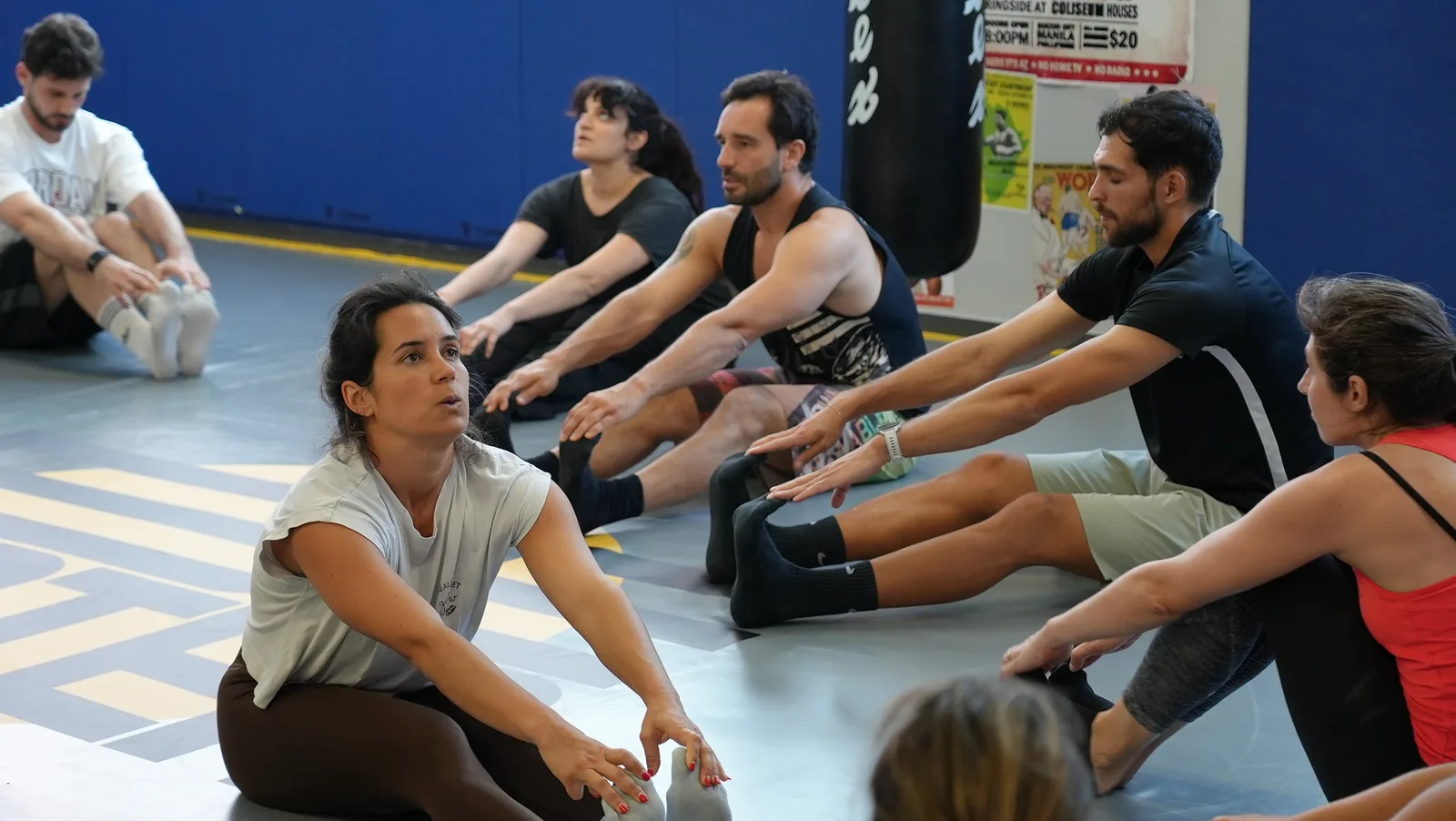
- Mats: 10 to 15 minutes of solo Jiu-Jitsu drills (hip escapes, bridges, technical stand-ups) or with a training partner you’ve arranged to meet
- Mobility: hips, thoracic spine and ankles, 2 to 3 exercises each
- Final stretch: 10 minutes, slow breathing
It’s the right session for a day when your body wants rest but your head wants to come in and train. We explain why this work matters so much in mobility and injury prevention.
How to fit Open Gym into your week
Open Gym works best as one piece of the week, not as a replacement for classes. Two set-ups that work:
- Two classes + one strength Open Gym. For people who want to progress in a martial art without neglecting strength.
- Three classes + one easy Open Gym. Technique, bag work at a moderate pace and mobility, as an active recovery session.
What shouldn’t happen is Open Gym becoming one more hard session on top of four or five. If you want complete weekly templates, it’s all in how to build your training week.
Rules for sharing the space
Open Gym only works if everyone treats it as a shared space:
- Book in the app before you come, just like a class
- Put away what you used: plates on the rack, dumbbells back in place, mats clear
- Share equipment: if someone is waiting for the rack, alternate sets
- Respect classes in progress: if there is a class on the mats, you train in the gym, and vice versa; don’t cut across the class area or use equipment that’s in use
- Rolling or partner drills only by prior arrangement, and always at a controlled pace
- If in doubt, ask. Better to ask than to teach yourself an exercise wrong
Quick questions
Is Open Gym included in my plan? Yes. Every plan, the drop-in and the packs include Open Gym.
Do I need to book? Yes, in the Be Water app, just like classes.
Is there a coach during Open Gym? There’s no class and no dedicated coach, but the team is around and will answer your questions.
Next step
If you don’t train at Be Water yet, book a free trial class on WhatsApp (+351 933 869 791) and get to know the space in a class. After that, Open Gym is yours. See the times for every modality on the schedule page and the plans on the pricing page.
Be Water Lisboa - Av. do Brasil 7, Campo Grande. Monday to Friday 06:30-14:00 and 16:00-21:00, Saturday 10:00-13:00, Sunday 11:00-12:00 (Open Gym + Open Mat).
— Bruno Salgueiro, Founder