“I want to lose weight. Which class should I do?” It’s probably the question we hear most at the front desk. And it deserves an honest answer, in two parts.
The first part is uncomfortable: no class, on its own, will make you lose weight. The second is the one almost nobody tells you: the right training decides what you lose (fat or muscle) and, above all, whether the weight you lost stays lost.
This article covers both parts, what each discipline at Be Water gives you if your goal is weight loss, and how to put together a week that works.
The uncomfortable truth: training alone isn’t enough
Losing weight is, at its core, using more energy than you eat, for long enough. And this is where training has a scale problem: one hour of class is one hour out of the 168 in a week.
In practice, three things happen to people who try to lose weight through training alone:
- They overestimate what they burned. A hard class feels like it’s worth a whole dinner. It isn’t.
- They eat more without noticing. Training makes you hungry, and a “well-earned” snack plus two beers can easily undo an entire class.
- They move less for the rest of the day. After a hard session, it’s normal to take the lift more often and spend more time sitting down.
None of this means training is useless for weight loss. It means the scale is decided mostly in the kitchen, and the job of training is a different one, just as important.
What training does that a diet can’t
1. It protects your muscle. When you eat less without strength training, part of the weight you lose is muscle. And less muscle means a body that burns less energy 24 hours a day, which makes the yo-yo effect far more likely. It’s the same mechanism we cover in exercise on Mounjaro and Ozempic: losing weight without strength training is losing weight the expensive way.
2. It changes your body composition. In the first months, people who start training can often lose fat and gain some muscle at the same time. The scale barely moves, but your waist, your clothes and the mirror change. That’s why the scale, on its own, lies.
3. It helps you keep the weight off. Losing weight is the easy part, and most people have done it more than once. Keeping it off is the hard part. Studies of people who manage to keep weight off long term show that regular physical activity is one of the habits they most often have in common.
4. It improves your sleep and your head. Poor sleep increases hunger and lowers your willingness to make good choices. Training helps you sleep better and manage stress, which is often what’s behind eating when you’re not hungry. We wrote about this in martial arts and mental health.
What about calories per class?
There are plenty of numbers going around, and some of them are true for some people: an intense Muay Thai class can burn a lot of energy. But the real figure depends on your weight, your experience and how hard you train. A beginner who stops between rounds to catch their breath doesn’t burn the same as someone who keeps the pace from start to finish.
And watches and apps get this number quite wrong. Treat it as a curiosity, not as accounting. And never train to “earn” calories to eat afterwards.
What each discipline gives you
They all help, but not in the same way. Since every Be Water membership includes every discipline, you don’t have to pick just one.
Cross-Training: strength and conditioning in the same hour
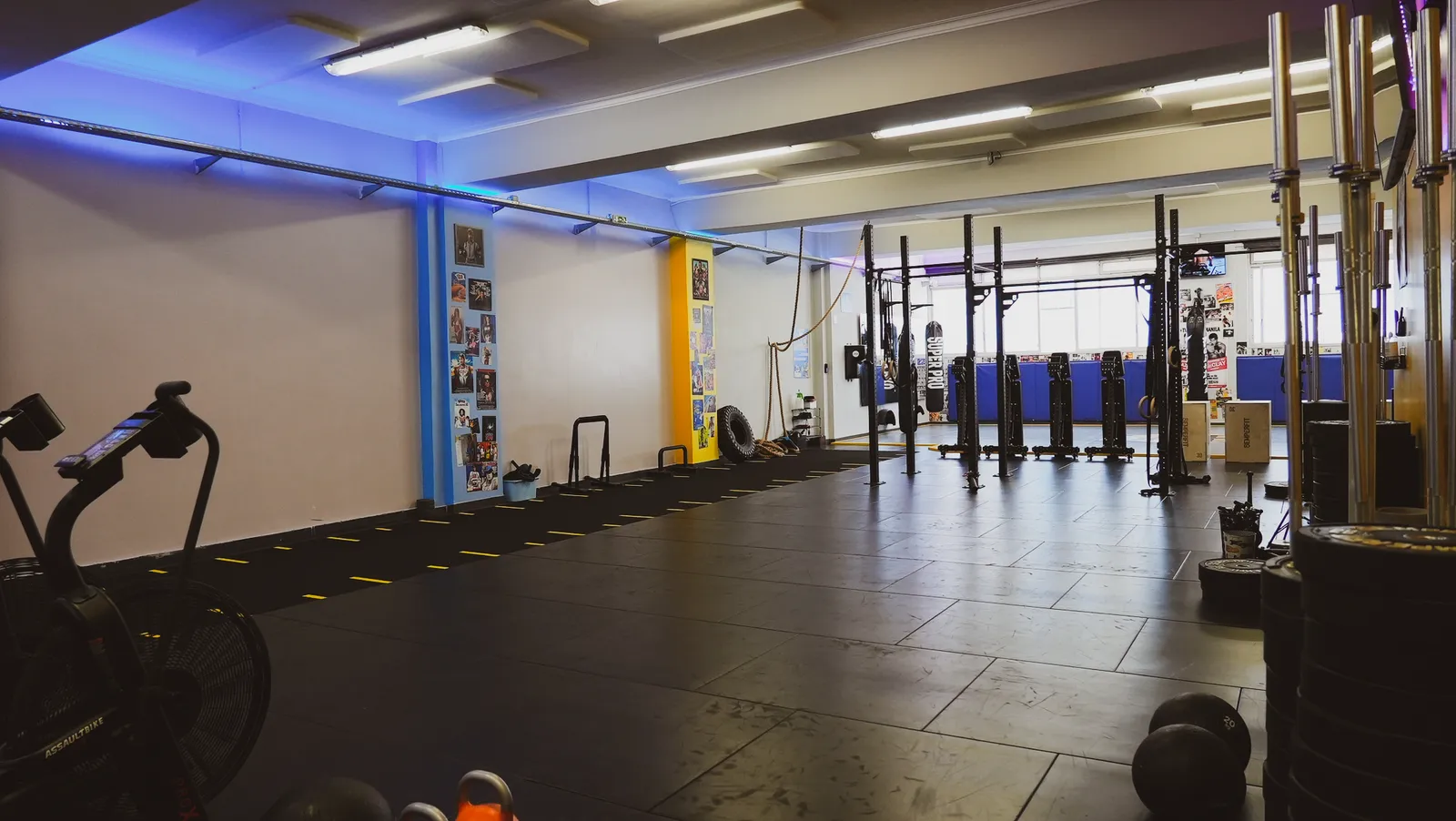
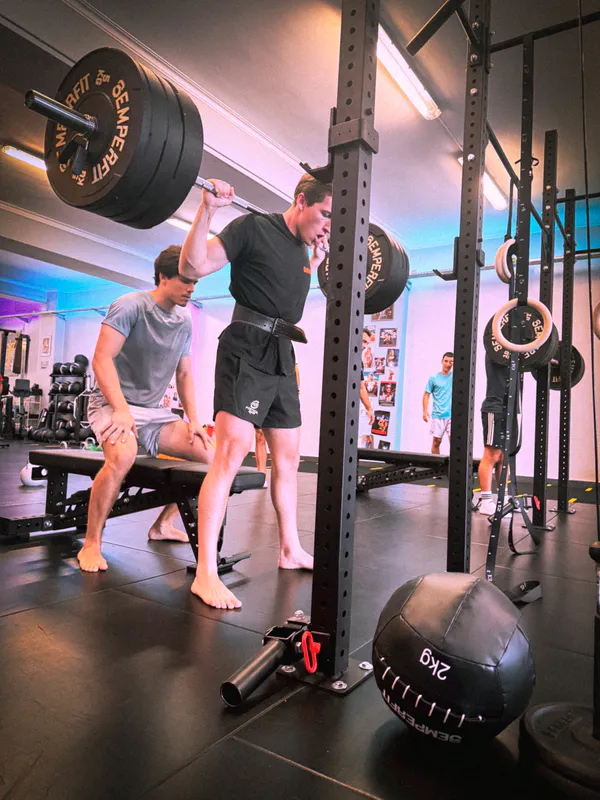
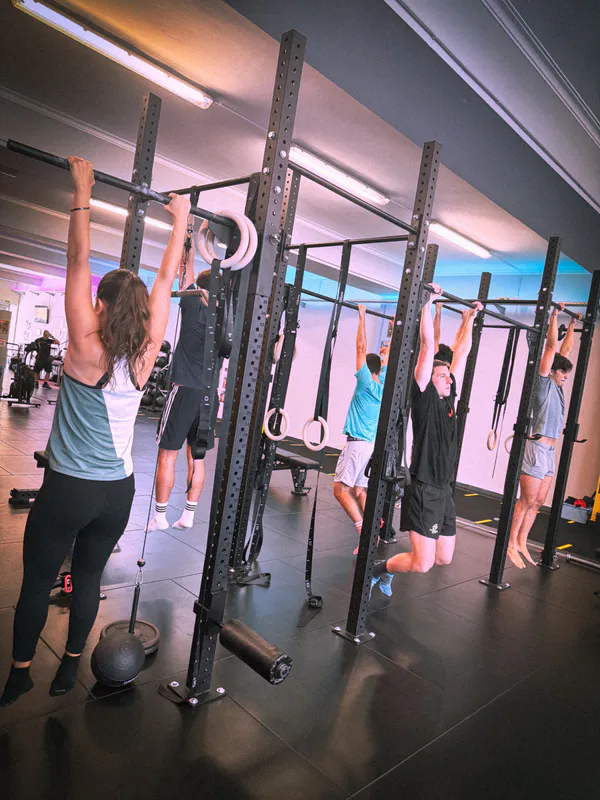
If you had to pick a single class for weight loss, it would be this one. A Cross-Training session gives you both things you need: strength (barbells, dumbbells, kettlebells), which protects your muscle, and conditioning (intervals, circuits, air bikes), which pushes your heart and lungs. The coach adjusts the loads to your level, so it works whether you’re just starting or have been training for years.
It’s also the class with the most slots on the timetable: several times a day during the week and on Saturday morning. Find out more on the functional training page.
Boxing and Muay Thai: intensity without watching the clock
Rounds of hard effort with short breaks are, in practice, interval training. Muay Thai also brings in legs, knees and elbows, which gets your whole body working.
The big advantage is something else: you’re so focused on landing the combination that the hour goes by without you looking at the clock. For anyone who gets bored at the gym, that’s gold. The limit is that they don’t replace strength training with loads, so they work best with one or two strength sessions a week alongside. If you can’t decide between the two, read boxing or Muay Thai.
Jiu-Jitsu: the workout that feels like a game
Five minutes rolling with a partner leaves anyone out of breath: it’s endurance, grip strength and strength in awkward positions, all at once. The technical part at the start of class is calmer, and in the first months you’ll spend more time learning than sweating.
Where Jiu-Jitsu wins is adherence. Plenty of people would never go back to a gym to “do exercise”, but never miss a session because they want to solve the position they got stuck in the week before.
Stretching: it doesn’t burn much, but it holds everything else together
Stretching isn’t a class for burning energy. It’s mobility and recovery, and it’s what lets you train week after week without the aches that force you to stop. For anyone losing weight and starting to train more often, that matters a lot. We explain why in mobility and injury prevention.
The best discipline is the one you do for a year
Three months of the “perfect” plan you hate will always lose to a full year of a class you enjoy. Fat loss is slow, and what sustains it is consistency, not optimisation.
So choose whatever makes you come back. If you don’t know where to start, we have a guide on which discipline to choose, and the trial class is free.
A sample week for fat loss
The base we recommend: two sessions with strength work a week, plus one or two of conditioning or a martial art, and moving every day outside the gym.
With three sessions a week:
- Monday: Cross-Training
- Wednesday: boxing (or Muay Thai on Tuesday or Thursday)
- Saturday: Cross-Training
With four sessions a week: add a strength session in Open Gym or a Stretching class (Tuesday and Thursday) to recover.
Every day: walk. Take the stairs, walk to the metro, walk while you’re on the phone. The movement you do outside the gym weighs more in your weekly energy use than it seems, and it’s the first thing to disappear when life gets busy.
The times for every class are on the schedule page. If you’d like more sample weeks, with two, three or five sessions, it’s all in how to build your training week.
The food part, without miracle diets
We’re not nutritionists and we don’t sell diets or supplements. But the basics we see working are always the same:
- Protein at every meal. It helps protect your muscle and keeps you full for longer.
- Minimally processed food at most meals. Vegetables, fruit, meat, fish, eggs, pulses.
- Watch what you drink. Juices, soft drinks and alcohol add up fast and don’t fill you up.
- A moderate deficit, not permanent hunger. Losing between 0.5% and 1% of your body weight a week is a pace most people can sustain without losing strength or their minds.
If you have a health condition or take weight-loss medication, take this path with your doctor or a nutritionist. Training still belongs in it, and it matters even more there.
How to track progress without going mad over the scale
- Scale: weigh yourself at the same time, before eating, and look at the weekly average. Your weight swings one or two kilos from one day to the next from water and salt alone.
- Waist measurement: a tape measure, once a week. It often moves before the scale does.
- Clothes and photos: month to month, always in the same light.
- Strength: if your loads go up while your weight goes down, you’re losing fat, not muscle. It’s the best sign you can get.
For realistic timelines, read how long it takes to see results.
Quick questions
Can I lose weight with boxing classes alone? Yes, if your eating follows. But adding one or two strength sessions a week helps make sure the weight you lose is fat and not muscle.
Does fasted training burn more fat? What counts is the balance over the day and the week, not whether fat is used during the class. Train in whatever way makes you feel and perform best.
How many times a week do I need to train? Three is a good starting point. If you’re starting from zero, begin with two and add the third when your body and your diary allow.
Next step
Book your free trial class on WhatsApp (+351 933 869 791). Tell us your goal is weight loss and we’ll help you choose where to start.
Memberships start at €64.90/month, with no lock-in, and include every discipline: functional training, Jiu-Jitsu, boxing, Muay Thai and Stretching. See all the options on the pricing page.
Be Water Lisboa - Av. do Brasil 7, Campo Grande. Monday to Friday 06:30-14:00 and 16:00-21:00, Saturday 10:00-13:00, Sunday 11:00-12:00 (Open Gym + Open Mat).
— Bruno Salgueiro, Founder